

Utility Task Vehicles (UTVs) are increasingly becoming indispensable tools in modern agricultural production. With their excellent mobility and versatility, UTVs play a crucial role in agricultural operations, ranging from transportation and seeding to field management, significantly enhancing farming efficiency.

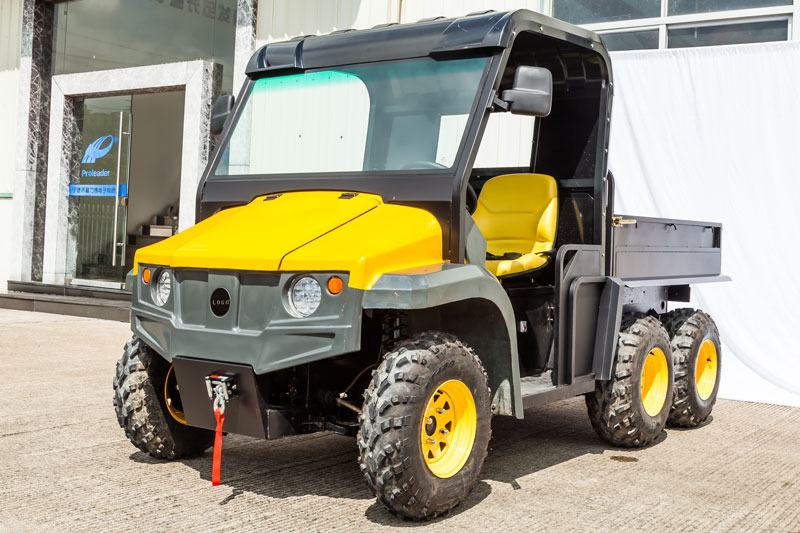
UTVs offer notable advantages in material transportation. In agriculture, farms typically span vast areas, requiring the transport of seeds, fertilizers, pesticides, and other materials to various locations. Due to their superior off-road capabilities, UTVs can maneuver through muddy and rugged terrains with ease while carrying substantial loads. This greatly reduces transportation time and lowers labor costs. Farmers can quickly deliver essential materials to the work site, thereby improving production efficiency.
The application of UTVs in seeding and crop protection tasks is equally important. Modern UTV designs can be equipped with various agricultural implements, such as seeders and sprayers, making seeding and pesticide application more efficient. Through specialized modifications, UTVs can achieve precise seeding and uniform spraying, minimizing waste of seeds and pesticides, and promoting better crop growth. Compared to traditional manual labor, UTVs can complete large-scale tasks in much less time, enhancing farming efficiency.
Moreover, the flexibility of UTVs in field management introduces convenience to agricultural production. Whether conducting routine inspections or pest control, UTVs enable farmers to quickly access fields for management purposes. Farmers can cover the entire farm in a shorter amount of time, promptly identify issues, and take appropriate actions, thereby effectively maintaining crop health.
In conclusion, the extensive use of UTVs in agricultural production not only boosts operational efficiency but also improves farmers' working conditions. As technology continues to advance, UTVs will play an even greater role in the agricultural sector, driving the modernization of agriculture and contributing to food security and sustainable development.
Post time: Aug-28-2024